







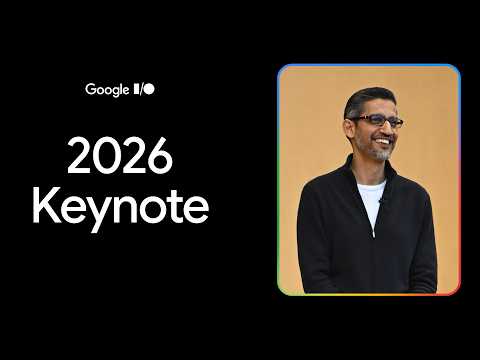
On May 19, 2026, at Google I/O, Liz Reid — Google’s VP of Search — unveiled what the company calls “the biggest Search update in 25 years.”
This isn’t incremental. It’s architectural.
The thesis: Google is merging the traditional search engine with an AI agent ecosystem that can understand, reason, create, and act.
Key updates from the keynote:
- AI Mode has surpassed 1 billion monthly users
- AI Mode queries are doubling every quarter since launch
- Gemini app: 900 million monthly active users
- Google now has 13 products with 1B+ users each
- Alphabet is spending $180–190 billion this year on AI infrastructure
Seven interconnected features were announced: the Intelligent Search Box, AI Mode with Agentic Search, Information Agents, Antigravity (generative UI), Agentic Booking, Universal Cart, and the Agent Payments Protocol (AP2).
Watch the full Google I/O ’26 Keynote here:
Let’s dive into some of the key features announced.
1. The Intelligent Search Box — Live Now/Soon
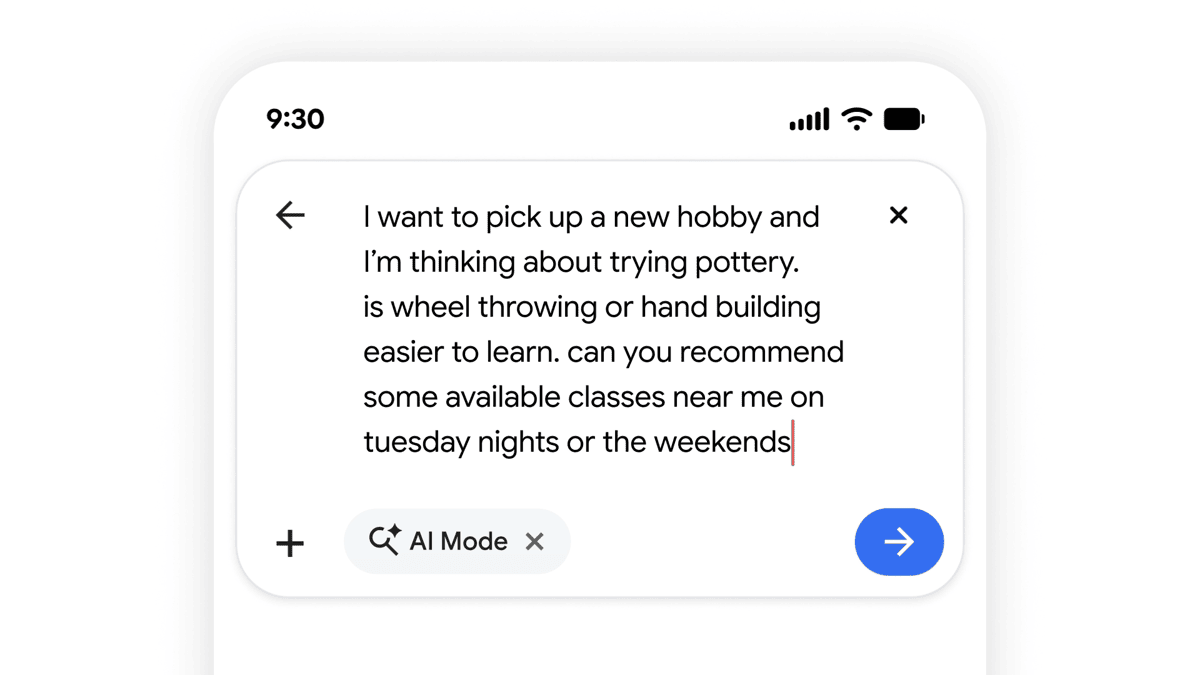
The search bar now dynamically expands for longer conversational queries, accepts images, files, videos, and Chrome tabs as input, and offers AI-powered suggestions that anticipate intent beyond autocomplete. Live today in all AI Mode countries.
AI Mode: Google’s conversational search state, now powered by Gemini 3.5 Flash — which surpasses the previous 3.1 Pro model in coding, agentic, and multimodal benchmarks, at 4x faster output speed.
2. Information Agents — Coming Soon
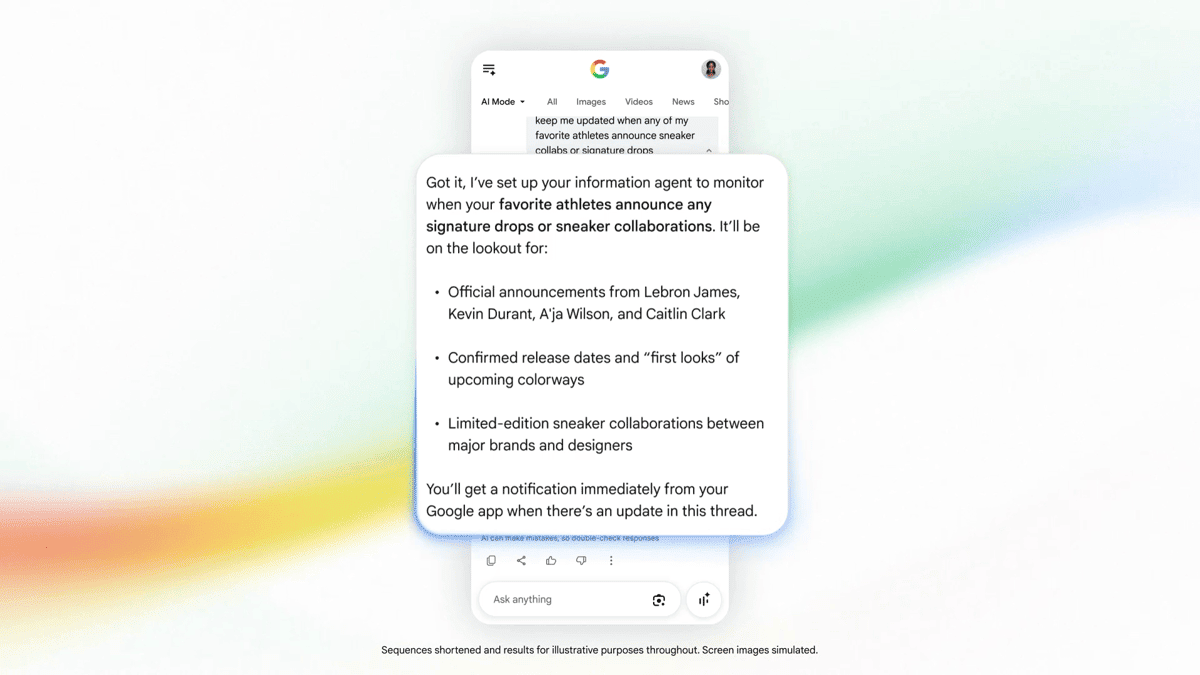
24/7 background agents that continuously monitor the web — blogs, news, social, real-time finance/sports/shopping data — for your specific criteria. TechCrunch called them “the next evolution of Google Alerts.” For AI Pro & Ultra subscribers first, which comes with a hefty price tag — however, it’s likely that if this play pays out, the price will either come down, or the trade off will be worth it.
Examples from the keynote:
- Apartment hunting: agent continuously scans for listings matching your criteria
- Sneaker collab alerts: agent notifies you when a new drop lands
- Agents integrate with Gemini Spark and work across surfaces
3. Antigravity / Generative UI — Coming Soon
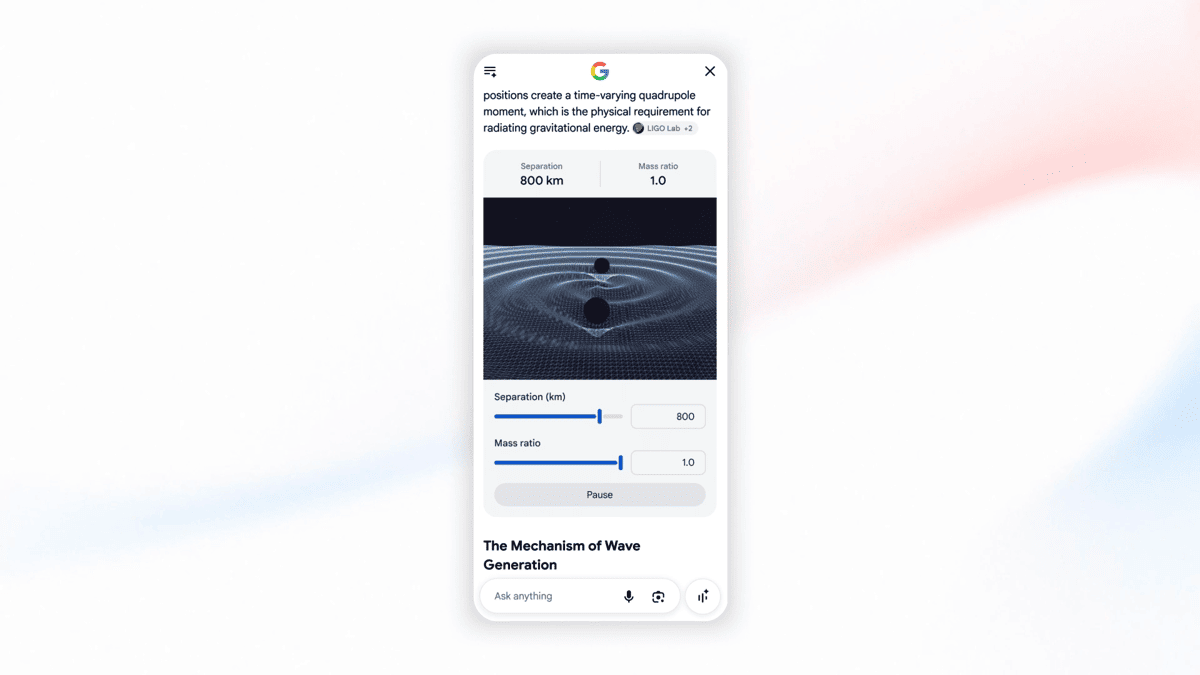
Search generates custom interactive applications on the fly. Powered by Gemini 3.5 Flash’s coding capabilities. Free generative UI for everyone; custom mini-apps for Pro/Ultra.
Keynote demos: interactive astrophysics visualisations, an exploded-view watch diagram, a live weekend planner pulling real weather/events/maps data. Oh, and yes — it ran Doom (the game, for those who don’t know).
Generative UI will be available for everyone this summer, free of charge. Custom mini-apps for Pro/Ultra subscribers in the U.S.
Why does this matter? If Search generates a mortgage calculator, fitness tracker, or trip planner on demand — what happens to the millions of single-purpose websites built for exactly those functions?
4. Agent Bookings & Universal Cart
Agentic Booking: Google calls businesses by phone for reservations (home repair, beauty, pet care at launch). Rolling out in the U.S. this summer.
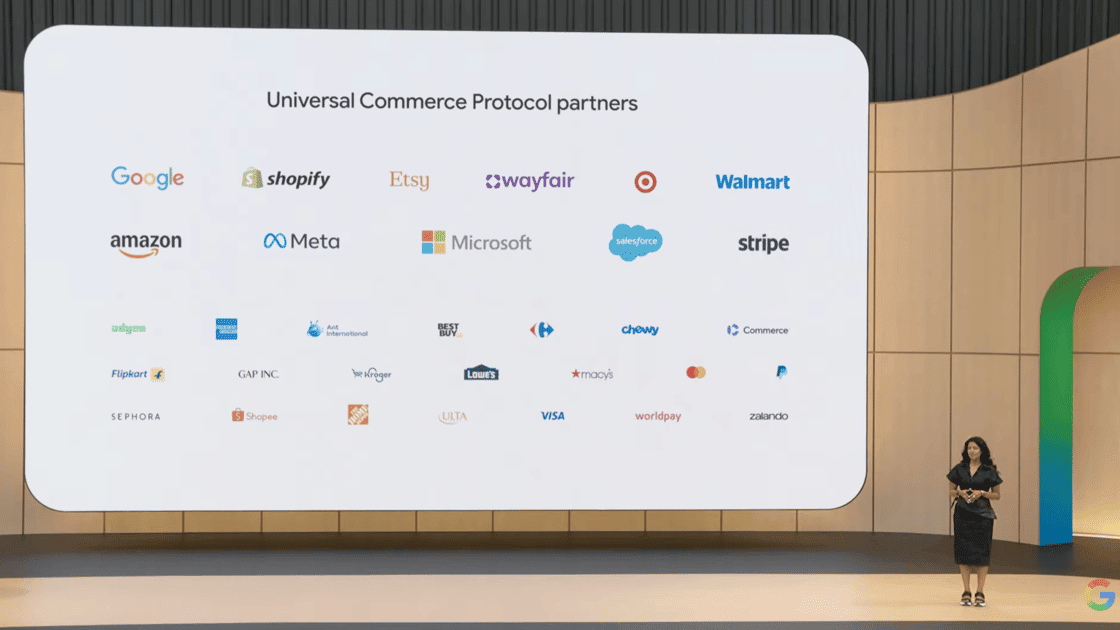
Universal Cart: One persistent cart across Search, Gemini, YouTube, and Gmail. Tracks price drops, flags incompatibilities, knows loyalty programs. Built on Google Wallet. Launch partners include Nike, Target, Walmart, Sephora, Wayfair, Ulta Beauty, and Shopify merchants including Fenty and Steve Madden.
Shopping Graph: 60 billion product listings; people shop across Google 1 billion+ times per day.
5. AP2 & Personal Intelligence
AP2: An open standard donated to the FIDO Alliance, with 60+ partners including PayPal, Mastercard, and American Express. As AI agents become more “agentic” — capable of executing tasks like booking services or buying products online — the AP2 protocol was introduced to provide security and control. It acts as a safety guardrail that lets you set spending limits, require merchant approvals, and keep transparent transaction records, ensuring agents don’t make unauthorised actions or purchases.
v0.2.0 (April 2026) added “Human Not Present” payments. Cryptographically signed “Mandates” create tamper-proof audit trails. Google has donated AP2 to the FIDO Alliance to make it an industry standard.
Personal Intelligence: 200 countries, 98 languages, no subscription. Connects Gmail, Google Photos, and soon Calendar. Search personalised by your actual context.
What does it all mean, Basil?
This is exciting. You SHOULD be paying attention.
The speed of innovation is unreal.
Voice-to-document in Docs, AI-generated apps inside Search, agents that monitor the web for you — this stuff genuinely makes people’s lives easier. Hard not to get fired up.
The part that needs attention? Google is becoming less of a search engine and more of an answer engine. A doing engine. A buying engine.
For businesses relying on Google to send people to their website, the ground is shifting. Fast.
What I’m watching from the Neon Treehouse side:
AI Overviews on 48% of queries changes SEO. If Google answers before someone clicks, your content needs to be what Google cites, not what it replaces. Original research, real case studies, genuine expertise. Generic how-to content gets squeezed. We’re already seeing customer search impressions hit outstanding levels — especially for sites with genuinely original content to support this new age of search.
Universal Cart is huge for e-commerce. Your store could become a fulfilment backend while Google owns the customer relationship. Confronting, yes — but brands that get product data and Merchant Centre feeds right early will be purchasable at the moment of discovery. We’re already seeing fully compliant feed integration run circles around ecommerce clients who haven’t got there yet.
Search Agents change discoverability. An AI agent scanning for a user doesn’t care about your hero image. It reads structured data, specs, pricing, availability. If that’s not machine-readable on your site, you’re invisible.
Budget calculators, comparison tools, ROI estimators — if Google generates a better version inside the search result, the user never visits your site. It actually shows that Google’s efforts with Gemini, Nano Banana, et al. are equally about stress-testing their own systems to build the best version of what search needs to be to survive into the future.
None of this means panic. It means prepare. There’s a real opportunity here.
The businesses that win this next chapter own their audience, have clean structured data, invest in genuine expertise, and integrate with Google’s infrastructure early.