




From AI-driven automation to the rise of programmatic media to new platforms competing for attention — there’s a lot changing, and even more opportunities opening up. We break down the biggest shifts we’ve seen across recent months, what we liked seeing for Black Friday, where the industry is heading in 2026, and how we’re helping brands navigate what’s next.
The State of Digital Ads: Wins, Woes & What Comes Next
Digital ads are having a moment — a somewhat complicated one. Recently, two shifts have defined almost every campaign we’ve run: AI automation becoming more aggressive on platforms like Meta, and programmatic advertising emerging as one of the most stable and effective channels in the mix.
What’s working ✔️
Programmatic advertising
Delivering some of the strongest performance we’ve seen all year, especially across video and native.
- Programmatic spend up globally by double-digits in 2025
- Faster optimisation cycles than Meta/Google
- Lower CPMs in premium environments
- Access to audiences not easily reached through traditional social/search
Short-form video
Instagram Reels, TikTok Spark Ads and YouTube Shorts continue to perform well compared to other formats across many industries, particularly for awareness and engagement-based campaigns.
Multi-channel strategies
Brands running on 3+ platforms (e.g. Meta + Google + Programmatic + TikTok) are outperforming single-platform advertisers in both ROAS and reach.
What’s not working ✘️
When automation goes too far
We’ve learned this firsthand: the shiny promise of “set and forget” sounds great… until it isn’t. Over the last few months, we’ve seen a noticeable spike in issues with Meta’s automated AI ad settings — not just in our own accounts, but across the industry too. And these aren’t tiny quirks you can shrug off. A few things we’ve personally run into (and heard from plenty of others):
Automation creeping back in… even after we turn it off.
We’ve had campaigns where we manually switch off every AI-creative toggle… only to come back the next day and discover Meta has quietly re-enabled them or applied its own tweaks during edits.
One frustrated advertiser on Reddit summed it up a little too perfectly: they described their ads reverting to unwanted AI-generated edits within a day or two of switching automation off.
Honestly? Relatable.
AI-generated creatives that just miss the mark.
We’ve also seen some pretty odd outputs from Meta’s Advantage+ tools — think random stock images that feel nothing like the brand, weird visual distortions, and copy that definitely wasn’t written by anyone human.
It’s well-intentioned automation… but the results can get strange fast.
Single-channel dependence
2025 made it clear: relying solely on Meta or Google leaves brands vulnerable to rising CPMs, algorithm volatility, or platform-specific limitations.
The Rise of Programmatic
This is the biggest shift in digital advertising this year, in our opinion, and one we want to emphasise for 2026 planning.
Why programmatic is winning
Across the industry:
- Programmatic ad spend is projected to make up 70%+ of all digital ad spend globally in 2025–2026
- In Australia, digital advertising spend rose to $16.4B in 2024 (+11%), with programmatic video driving a significant share of growth
- Video programmatic formats in Australia grew 23% YoY in early 2025
Brands turning to programmatic are seeing:
- Lower CPMs than Meta & Google (especially Q4)
- Stronger contextual targeting
- Broader reach into premium inventory — news publishers, lifestyle sites, sports, entertainment
Where Programmatic shines for our clients
- Advanced targeting (behaviours, contextual, custom audiences, geofencing)
- Premium placements without paying “premium platform prices”
- Strong cross-channel attribution
- Huge success with event-based, tourism and retail clients this year
Programmatic is no longer going to be “nice to have.” It’s become one of the most reliable channels for brand awareness, mid-funnel engagement, and full-funnel strategies heading into 2026.
Black Friday 2025, Who Did It Well?
This year saw a return to clean creative, fast-loading video, and conversational product-first messaging.
Standout Black Friday examples we liked:
- The ICONIC: sharp, simple dynamic product ads paired with clean creatives and urgency messaging
- JB Hi-Fi: consistent omnichannel messaging across social, YouTube, and display
- Mecca: strong mobile-optimised video with short punchy beauty benefits
- Cotton On: creator-led TikTok series that tied into their sitewide discounts
If you want the Black Friday advantage in 2026, start planning early. Testing in October is now the norm, not the exception.
Digital Media Predictions for 2026
Here are major shifts we anticipate dominating early 2026:
1. ChatGPT-powered commerce
With conversational shopping rolling out in the US and early tests showing high intent, we expect:
- ChatGPT integrated shopping experiences will be arriving very soon
- Paid placement options within conversational journeys (ad units or sponsored suggestions)
2. Google Search evolving beyond “links”
The new “Overview Stream” is already hinting at:
- More visual, AI-generated summaries
- Ads integrated inside AI results
- Shoppable moments embedded in SERPs
3. TikTok becoming a primary retail engine
TikTok Shop expansion + influencer affiliate networks = huge opportunity for e-commerce.
4. Audio & CTV accelerating growth
Expect more ad inventory across Spotify, podcast networks, streaming TV and live sports.
5. More AI, but with more guardrails
Platforms are racing to add automation and advertisers will be demanding more control next year.
6. Diversified ad stacks becoming standard
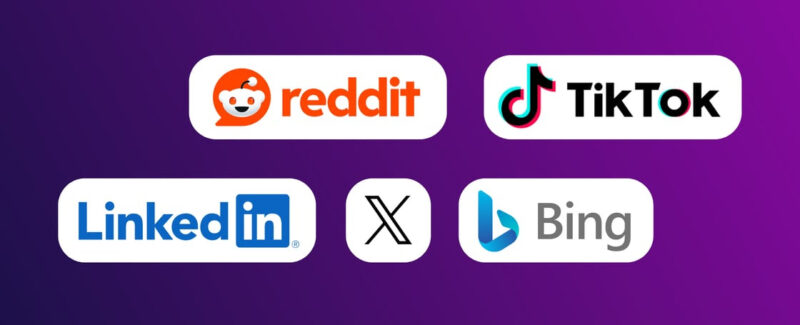
Brands relying on 4–6 platforms (Meta, Google, TikTok, Programmatic, Reddit, Bing) will outperform those on 1–2.
Going Beyond Google & Meta: Where We’re Seeing Wins for 2026
With CPMs climbing and audience attention stretching across more platforms than ever, relying solely on Google and Meta just isn’t enough anymore. We’ve been expanding our mix testing, learning, and scaling across platforms that offer real strategic advantages depending on the audience and objective. Here’s where we’re seeing strong traction:
Reddit
Reddit is becoming a quiet powerhouse. It’s ideal for brands that want to show up in niche, high-intent communities — think fitness, gaming, racing, parenting, automotive, crypto and countless micro-interests. Great for consideration campaigns, topic-based targeting and driving genuine discussions around a product or brand.
X (Twitter)
Love it or hate it, X still dominates real-time conversation. If you’re tapping into sport, finance, news cycles or cultural moments, it’s one of the fastest ways to reach people as the action unfolds. Best suited for large-scale reach and event-based campaigns.
TikTok Ads
Still unmatched for thumb-stopping creative and younger audiences, particularly 18–35 year olds. TikTok thrives on UGC-style creative, fast formats and creator-led storytelling. Strong for awareness, quick discovery and e-commerce via TikTok Shop.
LinkedIn
LinkedIn continues to be the strongest channel for B2B, professional services, recruitment and high-value lead generation. As the platform leans harder into video and live content, especially for 2026, we’re seeing a shift toward more dynamic, scroll-stopping formats, not just static thought-leadership ads. Ideal for reaching decision makers and professional audiences, promoting events, industry insights and webinars, etc. The targeting accuracy (by role, seniority, company size, industry) makes it one of the most efficient “quality over quantity” channels for 2026.
Bing
Bing continues to surprise people…in a good way. With Microsoft’s ecosystem (Windows, Outlook, Edge) baked into millions of everyday devices, Bing is quietly capturing a significant share of older, high-intent, professional, and corporate users who default to Microsoft search without thinking about it. It’s especially strong for B2B, government, education and tech audiences; search campaigns targeting users less active on Google; lower CPCs and competitive advantage in high-cost categories. It’s not flashy, but it’s consistently effective and often more cost-efficient than Google.
Programmatic
Programmatic has been one of our strongest performers this year allowing us to run CTV, native, video, display, and more across premium inventory with smarter behavioural and contextual targeting. It’s one of the most flexible tools for full-funnel campaigns, whether we’re reaching niche audiences or scaling nationally.